MQM-P Reiterates Demand for New Province Amidst 28th Amendment Discussions
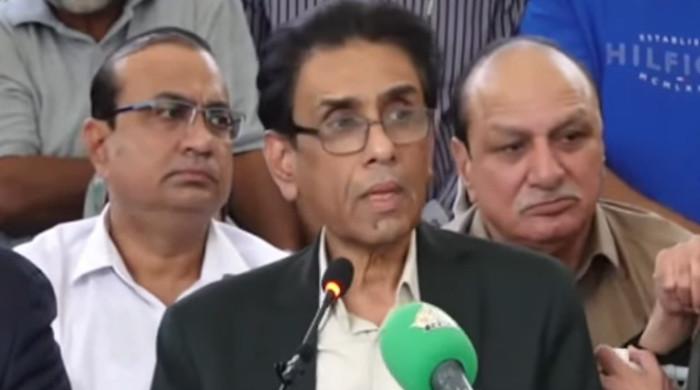
The Muttahida Qaumi Movement-Pakistan (MQM-P) has once again brought to the forefront its long-standing demand for the establishment of a new province in Sindh. This renewed advocacy was articulated by MQM-P Convener Khalid Maqbool Siddiqui during a press conference held in Karachi on November 20, 2025. The timing of this statement is particularly significant, coinciding with broader national discussions regarding the proposed 28th Constitutional Amendment, which has seemingly provided a fresh impetus for provincial restructuring debates.
The party's consistent stance on this issue reflects a deeply held belief that the current administrative structure of Sindh does not adequately address the needs and aspirations of all its diverse populations. For decades, the MQM-P has championed the cause of creating a separate administrative unit, primarily citing issues of governance, resource distribution, and representation for urban populations within the province.
Historical Context of the Demand
The demand for a new province in Sindh is not a recent phenomenon. It has historical roots embedded in the political landscape of Pakistan, particularly in the context of Karachi and other urban centres of Sindh. Proponents of a new province often highlight the perceived disparities in development, infrastructure, and public services between urban and rural areas of the province. They argue that a new administrative division would enable more focused governance and equitable resource allocation, thereby fostering development and improving the quality of life for residents in these areas.
The MQM-P has historically positioned itself as a representative voice for the urban populace of Sindh, particularly the Urdu-speaking community. Their arguments often revolve around the idea that a larger, more diverse province like Sindh struggles to cater effectively to the specific requirements of its densely populated metropolitan areas. This leads to a sense of marginalisation and neglect, which they believe can only be rectified through administrative reorganisation.
The current administrative structure of Sindh does not adequately address the needs and aspirations of all its diverse populations, necessitating a new provincial arrangement for equitable governance and development.
The 28th Amendment and Provincial Restructuring
The ongoing discussions surrounding the 28th Constitutional Amendment appear to have opened a window for various political parties to articulate their visions for administrative reforms. While the specific details of the 28th Amendment are still under deliberation, its very existence has reignited debates about provincial boundaries, local governance, and the distribution of power within the federation. This broader discourse provides a platform for parties like the MQM-P to push their long-standing agendas.
The concept of creating new provinces in Pakistan is a complex and often contentious issue, touching upon ethnic, linguistic, and political sensitivities. While some argue that it could lead to better governance and decentralisation, others express concerns about potential fragmentation, resource implications, and the possibility of exacerbating existing divisions. The MQM-P's renewed call will undoubtedly contribute to this ongoing national dialogue.
- The demand for a new province aims to address perceived administrative inefficiencies and resource disparities in Sindh.
- Proponents argue it would lead to more focused development and better public services for urban centres.
- The 28th Constitutional Amendment discussions have provided a fresh context for this long-standing political demand.
- The issue is deeply rooted in historical grievances concerning representation and governance in the province.
Implications and Future Outlook
The MQM-P's reiteration of its demand is likely to spark further debate and discussion within Sindh's political landscape and at the national level. Any move towards provincial restructuring would require broad political consensus and a thorough constitutional process, which is often challenging to achieve in Pakistan's diverse political environment. The party will likely continue to lobby other political stakeholders and engage in public discourse to garner support for its proposal.
The future trajectory of this demand will largely depend on the evolving political climate, the nature of the 28th Amendment, and the willingness of other political parties to engage constructively on the issue of provincial reorganisation. As discussions around constitutional amendments progress, the MQM-P's stance will remain a significant point of consideration in the broader national conversation about administrative reforms and equitable governance across Pakistan.

This article was written with AI assistance from a news lead and may not capture every detail. Please verify specifics with the original source:
The News →More in General
- Security Forces Eliminate Four Terrorists in Khyber Pakhtunkhwa Operations 2026-10-01
- Russia Offers Mediation in Pakistan's Regional Disputes 2026-09-30
- Security Forces Eliminate 23 Indian Proxy Terrorists in Kurram Operation 2026-09-21
- CM Afridi Clarifies By-Poll Remarks Following ECP Deployment Request 2026-09-19