Opposition Alliance Protests 27th Constitutional Amendment Outside Supreme Court
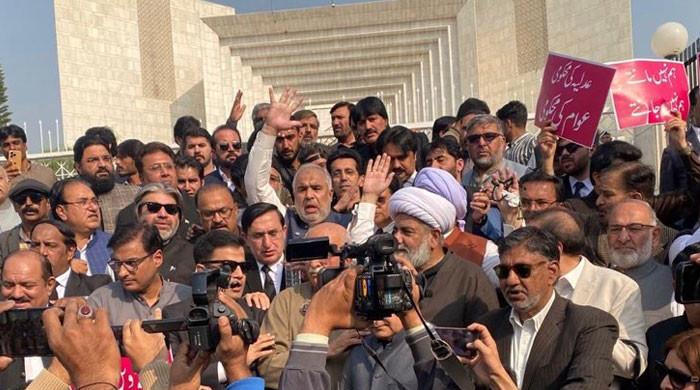
Islamabad witnessed a notable demonstration on November 18, 2025, as a coalition of opposition parties, operating under the banner of Tehreek Tahaffuz-e-Ayeen-Pakistan (TTAP), converged outside the Supreme Court. The protest was specifically organised to voice strong opposition against the 27th Constitutional Amendment, a legislative proposal currently under consideration. The event drew a considerable number of political figures and activists, highlighting the contentious nature of the amendment within the country's political landscape.
The gathering underscored the deepening political divisions surrounding the proposed constitutional changes. Leaders from TTAP and other allied political entities led the rally, expressing their concerns regarding the potential implications of the amendment on the constitutional framework and democratic principles of Pakistan. The choice of the Supreme Court as the protest venue was symbolic, emphasising the judiciary's role as the guardian of the constitution and the ultimate arbiter of constitutional matters.
Context of the Protest
Constitutional amendments in Pakistan are often subjects of intense public debate and political contention, given their far-reaching impact on governance, fundamental rights, and the balance of power among state institutions. The 27th Constitutional Amendment, while not detailed in its specific provisions in the immediate context, has clearly ignited significant apprehension among opposition ranks. Such amendments typically involve changes to the structure of government, electoral processes, judicial powers, or the distribution of authority between federal and provincial governments.
The opposition's decision to mobilise a protest rally suggests that they perceive the amendment as potentially detrimental to the existing constitutional order or as an attempt to consolidate power in a manner they deem undemocratic. Historically, constitutional amendments have been used to address evolving national needs, but they have also, at times, become tools for political maneuvering, leading to strong reactions from opposing factions. The TTAP's formation itself, as an alliance dedicated to the 'Protection of the Constitution,' indicates a pre-existing concern among its members regarding the sanctity and integrity of the country's foundational legal document.
The protest highlights significant opposition concerns regarding the potential impact of the 27th Constitutional Amendment on Pakistan's constitutional framework and democratic principles.
Participation and Demands
The rally saw the participation of various leaders and workers from the Tehreek Tahaffuz-e-Ayeen-Pakistan, along with other allied politicians. Their presence outside the Supreme Court was a clear message to both the government and the judiciary regarding their firm stance. While specific demands were not enumerated in the immediate report, such protests generally call for the withdrawal of the proposed amendment, a more inclusive consultative process, or a judicial review of its legality and constitutional compatibility.
The opposition's strategy often involves public demonstrations to build pressure, raise awareness among the populace, and influence public opinion against government initiatives they oppose. A protest of this magnitude, involving a significant opposition alliance, indicates a concerted effort to challenge the government's legislative agenda and to rally support for their position. The location, directly in front of the Supreme Court, also serves as an appeal to the judiciary to scrutinise the amendment closely, should it proceed through the legislative process.
- Voicing strong opposition to the 27th Constitutional Amendment.
- Highlighting concerns about the amendment's impact on constitutional principles.
- Calling for a review or withdrawal of the proposed changes.
- Mobilising public and political support against the amendment.
Future Implications
The protest by TTAP and its allies signals a potentially prolonged period of political contention surrounding the 27th Constitutional Amendment. The government, on its part, will likely need to address these concerns, either through dialogue, modifications to the amendment, or by robustly defending its necessity and constitutionality. The judiciary may also find itself in a pivotal role, as challenges to constitutional amendments often end up in the Supreme Court for final adjudication.
The political environment in Pakistan is frequently characterised by dynamic interactions between the government and the opposition, with constitutional matters often becoming central to these power struggles. The outcome of this particular amendment, and the opposition's continued resistance, will undoubtedly shape the political discourse in the coming months and could have lasting implications for the country's governance and democratic trajectory. The demonstration serves as a crucial indicator of the ongoing political dialogue and potential flashpoints within the Pakistani political system.

This article was written with AI assistance from a news lead and may not capture every detail. Please verify specifics with the original source:
The NewsMore in General
- ECP Initiates Process for Islamabad Local Government Elections 2026-11-27
- Punjab Police Apprehends TikTok Prankster in Faisalabad Following CPO Orders 2026-11-21
- Security Forces Neutralise 15 Terrorists in KP Operations, Including Indian Proxy Ringleader 2026-11-19
- Raja Faisal Rathore Assumes Office as Azad Jammu and Kashmir's New Prime Minister 2026-11-17