Supreme Court Directs Lower Courts to Re-evaluate Property Disputes Amid Soaring Real Estate Prices
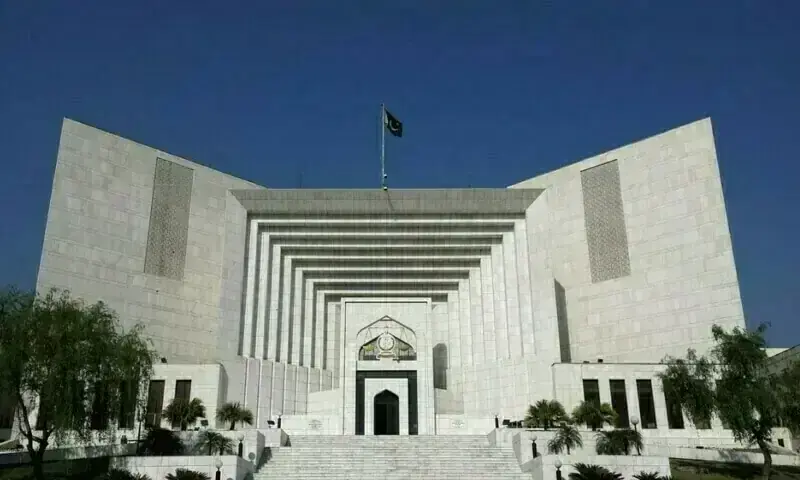
ISLAMABAD: The Supreme Court of Pakistan has issued a crucial directive to lower judicial forums, cautioning them on the adjudication of property disputes. The apex court has emphasized the need for courts to interpret real estate agreements in light of contemporary economic realities, acknowledging the rapid and often exponential escalation in property prices, a stark contrast to the slower appreciation observed in previous eras.
This significant observation underscores a judicial recognition of the dynamic nature of Pakistan's real estate market. Historically, property values might have seen gradual increases, allowing for more lenient interpretations of contractual delays. However, the current economic landscape, marked by inflation and speculative investments, has transformed real estate into a rapidly appreciating asset, necessitating a revised approach to contractual obligations.
In a landmark ruling, the Supreme Court explicitly stated that a buyer who misses a stipulated payment deadline cannot subsequently seek specific performance of the agreement. Specific performance, a legal remedy, typically compels a party to fulfill their contractual obligations. This verdict effectively protects sellers from potential losses incurred due to delayed payments in a market where property values can surge significantly within short periods.
The court's decision also upheld a previous ruling by the Lahore High Court (LHC) which had dismissed a purchaser’s suit under similar circumstances. This consistency across judicial tiers reinforces the principle that contractual deadlines in real estate transactions are to be treated with utmost seriousness, reflecting the financial implications of any delay for the seller in a volatile market.
This judicial pronouncement is expected to have far-reaching implications for the real estate sector across Pakistan. It places a greater onus on buyers to adhere strictly to payment schedules and contractual terms, potentially reducing instances of speculative buying where purchasers might delay payments in hopes of further market appreciation or simply due to financial constraints, while still expecting the original terms to be enforced.
For sellers, the ruling offers enhanced protection, safeguarding their interests against buyers who might exploit delays to their advantage in a rising market. It aims to foster a more equitable environment for property transactions, ensuring that both parties are held accountable to their agreed-upon commitments, especially when economic conditions can drastically alter the value of the asset.
The directive also serves as a guide for lower courts, encouraging them to move beyond a rigid interpretation of contract law and instead consider the broader economic context. This adaptive approach by the judiciary is crucial for maintaining fairness and preventing unjust enrichment or undue hardship in a sector that is vital to the national economy.
Looking ahead, this ruling is likely to prompt greater diligence in the drafting and execution of property agreements, with an increased focus on clear timelines and consequences for default. It may also lead to a reduction in litigation stemming from payment delays, as the legal recourse for defaulting buyers has been significantly curtailed, thereby streamlining the resolution of property disputes in the country.
This article was written with AI assistance from a news lead and may not capture every detail. Please verify specifics with the original source:
Dawn →More in General
- Security Forces Eliminate Four Terrorists in Khyber Pakhtunkhwa Operations 2026-10-01
- Russia Offers Mediation in Pakistan's Regional Disputes 2026-09-30
- Security Forces Eliminate 23 Indian Proxy Terrorists in Kurram Operation 2026-09-21
- CM Afridi Clarifies By-Poll Remarks Following ECP Deployment Request 2026-09-19